
Across manufacturing, warehousing, and industrial sites
Products
Digital Work Instructions E-paper Displays for Manufacturing
Linkvisu Industrial E-paper Displays put digital work instructions at every station — MES-synced, glare-free, and built to replace paper SOPs on assembly, inspection, and packaging lines.
Deployment & Application Scenarios
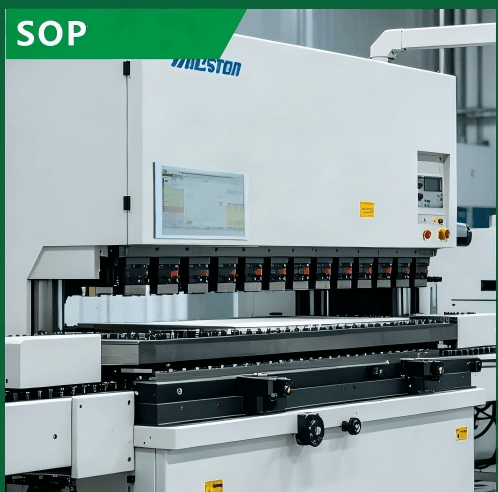
Purpose-built for frontline production stations, our terminals solve the core pain points of paper-based work instructions: easy damage, version mismatch, high printing cost and zero traceability.
1. Manual Assembly Cells
Replace static paper SOPs with dynamic, version-controlled digital work instructions. Workers get real-time CAD drawings, step-by-step guidance, and process updates, reducing assembly errors by 40%+ and cutting new employee onboarding time by half.
2. Quality Inspection Stations
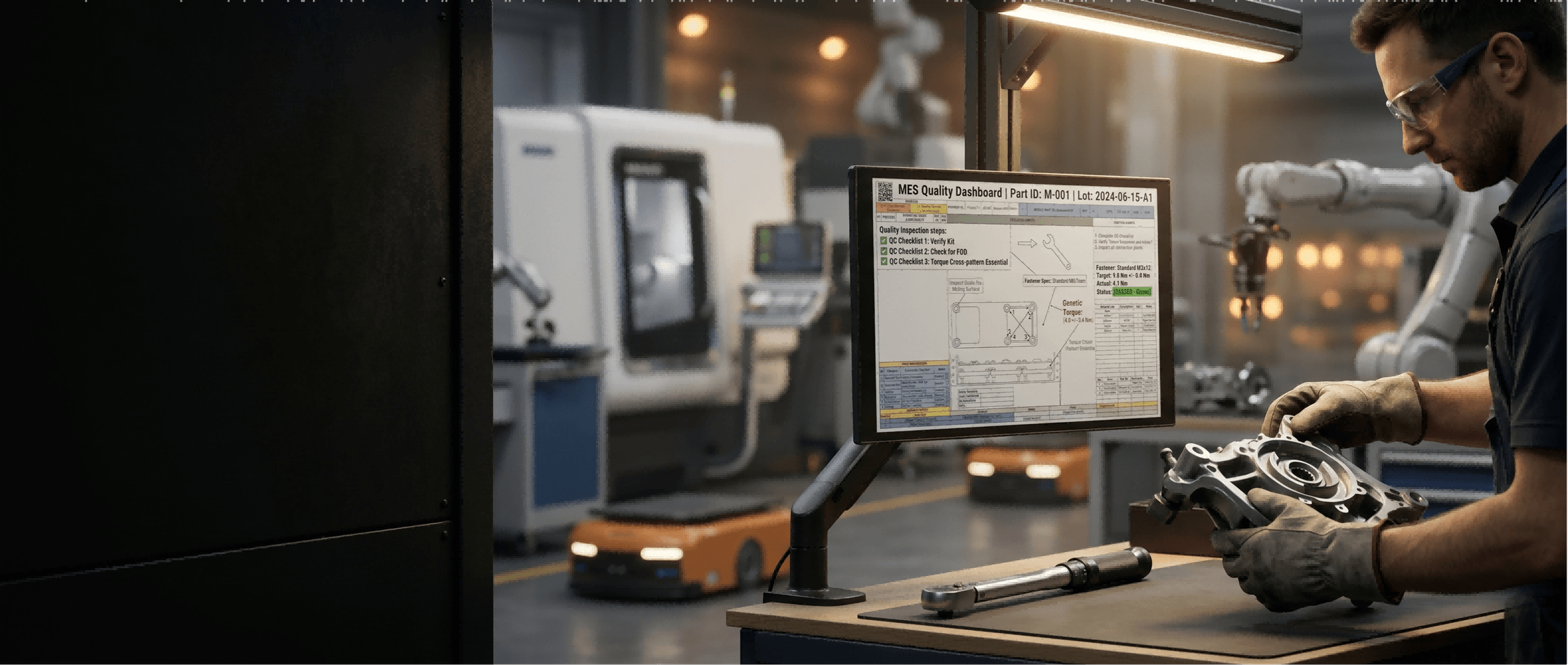
Display inspection standards, defect criteria, and checklists directly at the station. Inspection results sync back to MES instantly, building a fully traceable quality history and lowering compliance risks for regulated industries.
3. Packaging & Kitting Lines
Dynamically show packaging specifications, shipping labels, and order details. Content auto-updates when work orders switch, eliminating packaging mistakes from outdated paper documents.
Customer Case: SE Benchmark France Factory
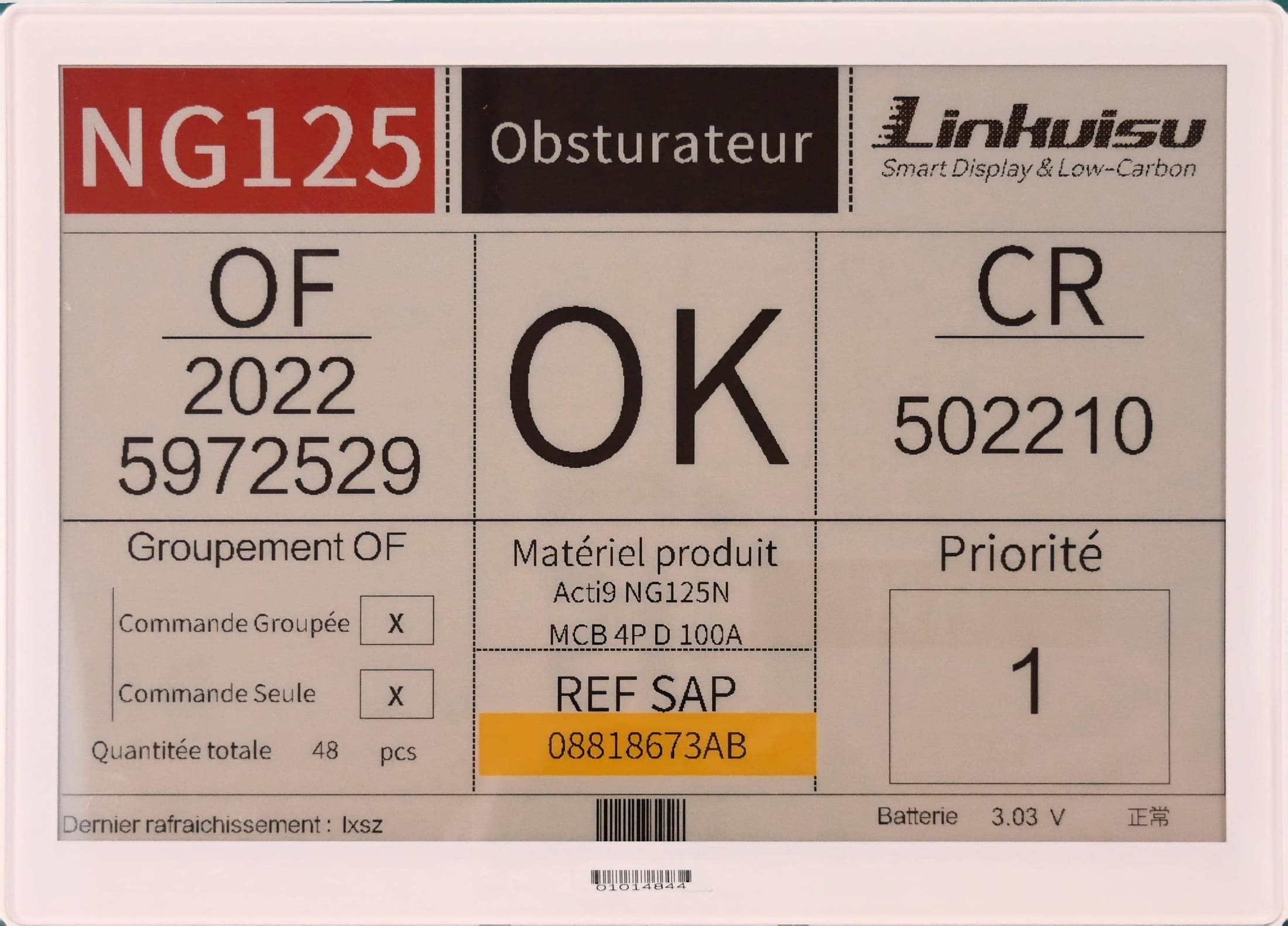
Deployed as digital work order boards across the assembly workshop, Linkvisu E-paper Displays are fully integrated with the factory's SAP and MES systems, replacing every printed work instruction on the line.
Core Project Functions
- Real-Time Task Dispatch: Displays OF/CR work order numbers, quality status, and line codes, visible to workers at a glance.
- Precision Specs Display: Showcases full product specs (e.g., Acti9 NG125N model parameters) to eliminate production errors from misread specifications.
- Dynamic Order Info: Supports multiple order management with content auto-updating based on different work orders.
- Barcode & SAP Integration: Integrates SAP reference numbers and barcodes, supporting scanner data collection for seamless closed-loop production management.
- Smart Maintenance: Built-in battery voltage monitoring and refresh time display for easy maintenance in complex environments.
Measurable Business Outcomes
- 100% elimination of paper SOP printing and replacement costs.
- 70% reduction in work order switchover time via auto content updates.
- Over 40% drop in manual assembly and specification errors.
- Full traceability of production process data, meeting industrial compliance requirements.
- Sunlight-readable display and power-off content retention, perfectly adapting to harsh factory conditions.
Linkvisu Core Capabilities
Build reusable delivery capabilities in display, connectivity, and low-carbon operations around industrial sites.
Paperless display, data collection, and positioning
Focused on launch, operations, and continuous optimization
Frequently Asked Questions
What are digital work instructions?
Digital work instructions (DWI) are the shop-floor executable version of an SOP: step-by-step guidance, delivered on an industrial display, updated centrally, and traceable per operator and work order. Unlike a PDF on a screen, DWI enforces version control, blocks skipped steps, and captures measurements back into MES.
What is the difference between an SOP and a work instruction?
An SOP describes the process at a policy level: who does what, why, and against which standard. A work instruction is the task-level companion to that SOP: the exact clicks, torques, tolerances, and checks an operator performs at one station. Digital work instructions are the machine-readable, always-current version of that task-level layer.
How do digital work instructions work?
Content is authored and version-controlled in a central system, then pushed to Industrial E-paper Displays on the line. When a work order scans or is dispatched, the correct instruction set loads automatically. Operator confirmations, defect codes, and measurements write back to MES or ERP in real time, closing the loop between paper trail and production record.
Can digital work instructions integrate with our existing MES or ERP?
Yes. Linkvisu Industrial E-paper Displays integrate natively with SAP and major MES platforms through APIs, barcode/RFID scanners, and work-order dispatch events. The SE France deployment runs on top of the factory’s existing SAP/MES stack with no separate instruction system.
Do digital work instructions require a full MES rollout first?
No. Linkvisu supports standalone operation and can start from simple work-order dispatch through CSV, ERP, or a lightweight API. Many factories begin by digitising one line and expand into MES-integrated dispatch after the pilot proves ROI.
Are Linkvisu Industrial E-paper Displays readable in bright factory environments or sunlight?
Yes. Zero-glare E-paper remains legible under direct sunlight and causes far less eye strain than LCD panels across long shifts, which is why Linkvisu displays are placed directly at assembly and inspection stations rather than behind a protective cover.
Do Linkvisu Industrial E-paper Displays lose content when power is cut off?
No. Bi-stable E-paper holds the last displayed frame without power. If a facility loses electricity, the display keeps showing the current work instruction — a safety property LCD panels and tablet kiosks cannot match.
How much can digital work instructions actually reduce errors and cycle time?
Across Linkvisu deployments, typical outcomes are 40%+ reduction in manual assembly and specification errors, up to 70% faster work-order switchover through auto content updates, and 100% elimination of paper SOP printing. Actual figures depend on line complexity — see the SE France case study above for a verified baseline.
Which industries benefit most from digital work instructions?
Manufacturing sites that carry version-control, traceability, or audit obligations get the fastest payback: electronics assembly, automotive and tier-1 suppliers, medical devices, aerospace, food and beverage packaging, and any regulated plant currently on printed SOPs.
Contact Us
Want to bring the solution to your site?
Around paperless display, data collection, and positioning, we can first clarify your scenario boundaries and then suggest a rollout path that fits the site better.
ConsultingSolution Discussion and Requirement Review
Clarify key information around products, solutions, and rollout scenarios before moving into detailed consultation.